
Edwards County Criminal Case Files
A criminal court record is the court case file, not just an arrest note or jail entry. In Edwards County District Court, the file begins when a criminal complaint, information, citation, or other charging document is filed with the court. It then grows as the case moves through first appearance, arraignment, bond, motions, hearings, plea or trial, disposition, sentencing, payment, probation, and post-judgment activity. The Clerk of the District Court is the local court-record access point for certified copies and records that do not appear online.
Kansas district courts are the primary trial courts of general jurisdiction. Edwards County is part of the 24th Judicial District, and district court handles felony cases plus misdemeanors and traffic crimes filed at the district level. Kinsley Municipal Court is separate and handles city ordinance or municipal traffic matters. A municipal case may create a city docket and, if appealed or transferred in some way, may later involve district court. For the charge wording and arrest-to-charge pathway, see the Edwards County arrest records and court charges page.
Search Edwards County Criminal Records
The main online search path is Kansas CaseSearch. The Kansas Judicial Branch describes CaseSearch as the public district court case information and document search tool. Search by defendant name, case number, citation number, attorney, or smart-search terms. Use Edwards County or the 24th Judicial District when filters are available, because statewide name results can include many counties.
- Open Kansas CaseSearch and choose a search method that matches the information available.
- Use the full legal name or exact case number from a notice, bond paper, citation, or charging document.
- Open the matching criminal case and read the docket events, charges, hearings, disposition, sentence, and financial entries.
- Check whether public documents are available online, but expect some items to require courthouse terminal access or a clerk request.
- Request certified copies from the district court when a signed journal entry, disposition, sentence, or order is needed for official use.
Statewide criminal history is different. The Kansas criminal history record search is a Kansas Bureau of Investigation central repository search, not an Edwards County case file. KBI public name-based record checks cost $30 and are subject to Kansas release limits. Public KBI results can exclude expunged arrests, prosecutions, convictions, or confinements, and they do not replace the court docket or certified case document.
The image below comes from the assigned Kansas criminal history search page.
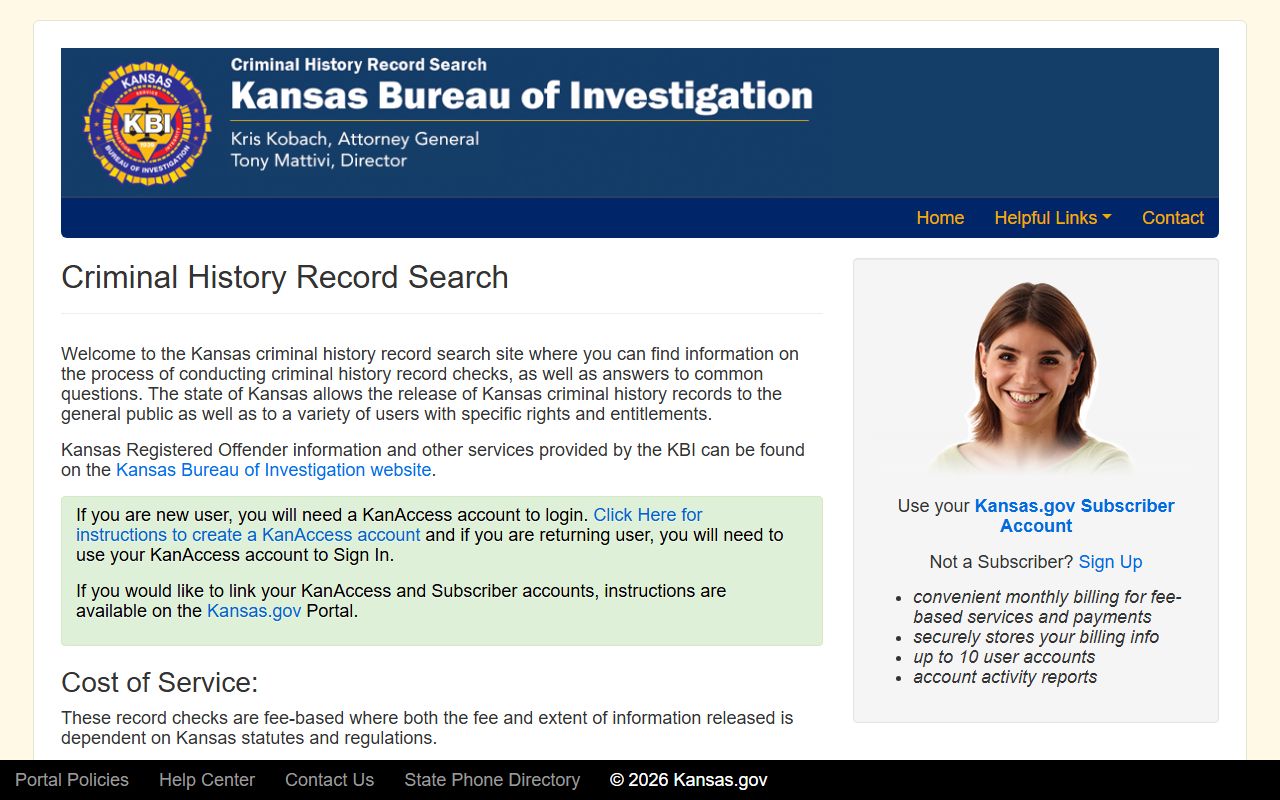
Use the KBI system when the question is statewide criminal history; use Edwards County court records when the question is what happened in one court case.
Edwards County Criminal Case Stages
A criminal court record becomes easier to read when the events are grouped by case stage. The charge is the accusation, the arraignment is where formal plea activity begins, and later events show whether the case was resolved by plea, trial, dismissal, diversion, or other disposition. Bond, fines, costs, restitution, probation, and sentencing terms can appear as separate docket entries or documents.
Case flow: Charges Filed › Arraignment › Pretrial / Motions › Plea or Trial › Disposition › Sentencing
| Stage | What Happens |
|---|---|
| Charges Filed | The prosecutor or charging authority files a complaint, information, citation, or other charging document with the court. |
| Arraignment | The defendant is advised of the charge and enters or prepares to enter a plea. |
| Pretrial / Motions | Attorneys file motions, discovery issues are addressed, hearings are set, and bond or warrant matters may appear. |
| Plea or Trial | The case is resolved by guilty plea, no-contest plea, trial verdict, dismissal, or another court-approved result. |
| Disposition / Sentencing | The court records the outcome, sentence, probation, fines, costs, restitution, jail credit, or other orders. |
What Edwards County Criminal Records Show
A criminal case file can show both the accusation and the outcome. That distinction matters because one Edwards County criminal court record may list charges that were amended, reduced, dismissed, or resolved differently by count. The docket and documents should be read together when possible. A single arrest can produce several counts, and each count can have a separate status or sentence.
| Field | What It Shows |
|---|---|
| Case Number | The Kansas district case identifier used for search, copy requests, docket lookup, and payments. |
| Defendant | The person charged, subject to redaction rules for juveniles or confidential information. |
| Charges | Count, offense description, Kansas statute or ordinance, severity level, and whether the count was amended or dismissed. |
| Plea | Guilty, not guilty, no contest, or other plea activity recorded by the court. |
| Hearings | First appearance, arraignment, motion hearings, trial settings, sentencing, and continuances. |
| Disposition | The current or final outcome by case or count, such as dismissed, convicted, acquitted, diverted, or closed. |
| Sentence | Jail, prison, probation, fines, costs, restitution, conditions, and journal entry details when public. |
County Attorney and Defense Role
The Edwards County Attorney is the county-level prosecutor. The official county page says the County Attorney prosecutes or defends civil or criminal suits in which the state or county is a party or interested, appears before courts, conducts criminal examinations, and gives legal opinions to county officials. The office is listed at 500 Marsh Ave. in Kinsley, phone (620) 659-3002, fax (620) 659-2583, and email mark@framelawllc.com.
Defense counsel also shapes the court record. Kansas State Board of Indigents' Defense Services provides defense counsel through public defender offices and assigned counsel systems for eligible defendants. No Edwards County-specific public defender office was confirmed in current official text, so a defendant who cannot afford counsel should request appointed counsel at first appearance or through the Edwards County District Court. The court and BIDS process determine whether a public defender or assigned counsel is appointed.
The KBI record check instruction page is assigned to this page for statewide background-check limits.
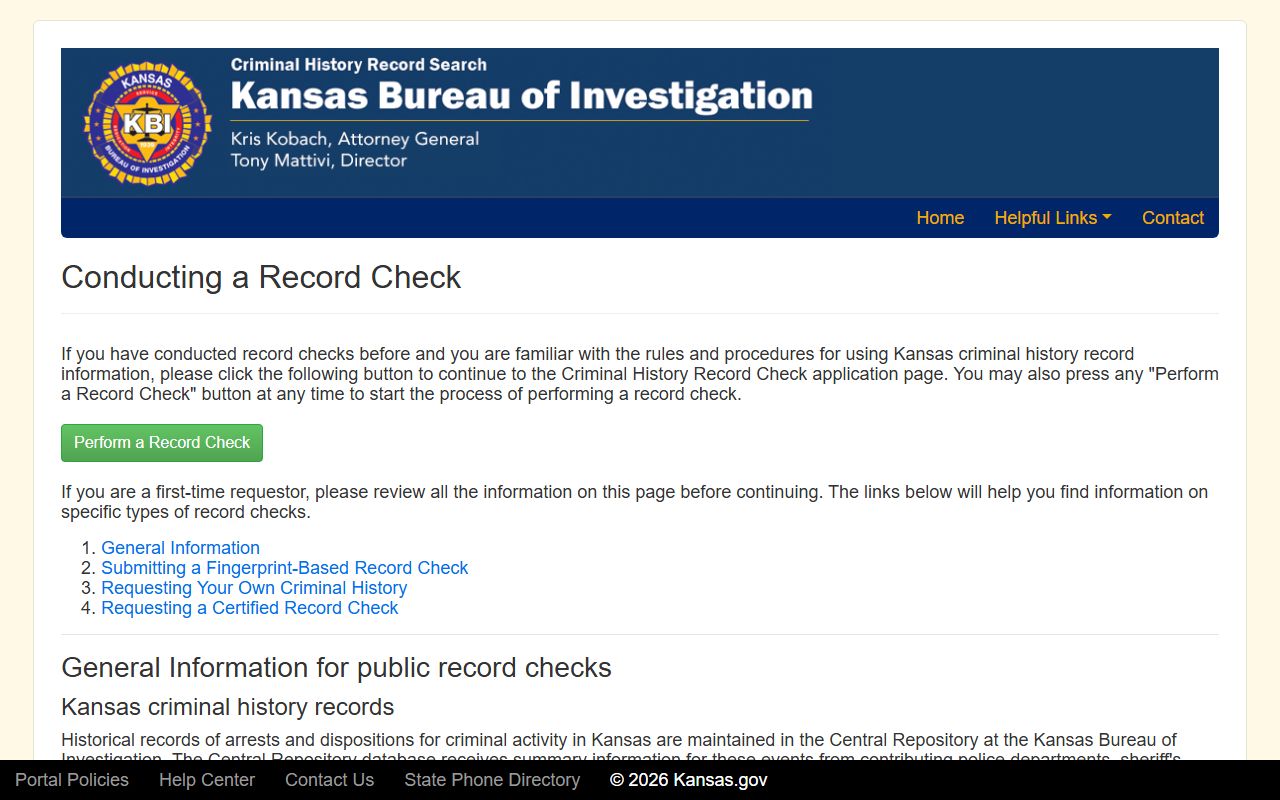
Those instructions help separate a Kansas criminal history purchase from the Edwards County criminal court file kept by the court.
Charges vs Convictions
Being charged is not the same as being convicted. A charge is an allegation filed in court. A conviction follows a guilty plea, no-contest plea accepted by the court, or guilty verdict. A criminal court record can show charges that are pending, amended, dismissed, reduced, or tied to an acquittal. Read each count, not just the case caption.
| Charge | Conviction | |
|---|---|---|
| Stage | Filed accusation or count. | Final result after plea or verdict. |
| Proof Level | Probable cause or filing basis. | Beyond a reasonable doubt or admitted by plea. |
| Record Meaning | May later change, be dismissed, or be reduced. | Usually appears in disposition and sentencing entries. |
| Where to Verify | Charging document and docket. | Disposition, journal entry, sentence, and certified copy. |
Dispositions and Sentencing Entries
Disposition entries are the record's outcome markers. They may show guilty, not guilty, no contest, dismissed with prejudice, dismissed without prejudice, acquitted, diverted, revoked, or closed. A sentencing entry may show jail or prison term, probation, fines, court costs, restitution, conditions, credit for time served, reporting rules, or payment status. Fines and costs for some criminal or traffic matters may route through the Kansas Central Payment Center when payable.
If a disposition will be used for employment, licensing, immigration, housing, military, or other formal purposes, use a certified court document rather than a screenshot or search result. Kansas court copy research lists 25 cents per page, $10 per certified document, and mailing fees of 50 cents for the first five pages plus 25 cents for each additional five pages.
Note: A docket line can identify a sentence, but a certified journal entry is the stronger proof for official use.
Sealed vs Expunged Records
Kansas treats sealed and expunged records differently from ordinary public criminal court records. A sealed record is closed from ordinary public inspection by statute or order. An expungement is a court process that limits public access to certain criminal records after statutory conditions are met. Kansas Judicial Council forms include adult expungement materials, including arrest-record-only forms.
| Sealed | Expunged | |
|---|---|---|
| Public Search | Hidden or partly hidden because the court closed access. | Limited from public court and criminal-history access after an order. |
| Authority | Statute or court order. | Kansas expungement process, including K.S.A. 21-6614 or K.S.A. 22-2410 contexts identified in research. |
| Agency Updates | Access stays controlled by the sealing order. | The petitioner should confirm downstream updates, including KBI when relevant. |
| Proof | Use the court order or clerk confirmation. | Use the signed expungement order, not a missing online result. |
The KBI criminal history FAQ is assigned to this page as an image source.
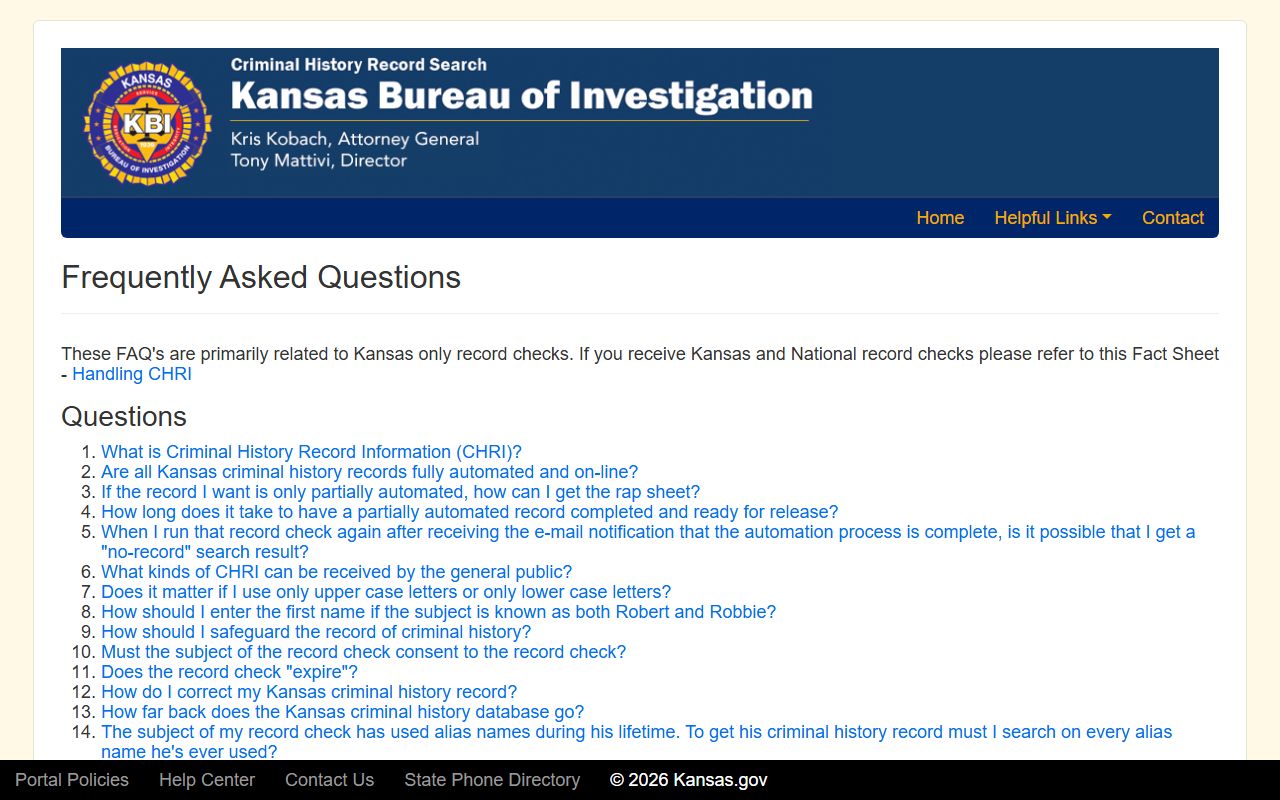
KBI's release limits are separate from what an Edwards County court can provide from its own file.
Public Access to Criminal Records
Kansas court records access is controlled by Kansas Supreme Court Rule 22, Rule 106B, and case-specific confidentiality rules. Public district criminal case information can be searched online when available, but sealed records, juvenile matters, protected personal identifiers, victim or safety information, and some law-enforcement material may be withheld or redacted. The Kansas Open Records Act supports public access to agency records, but court case records follow judicial access rules first.
The KBI registered offender system is another separate statewide public source. It is not the same as a criminal court case file, and it should not be used to infer the full Edwards County docket. It may identify registered offender information released under state rules, while the court record shows the filings, plea, disposition, and sentence in a specific case.
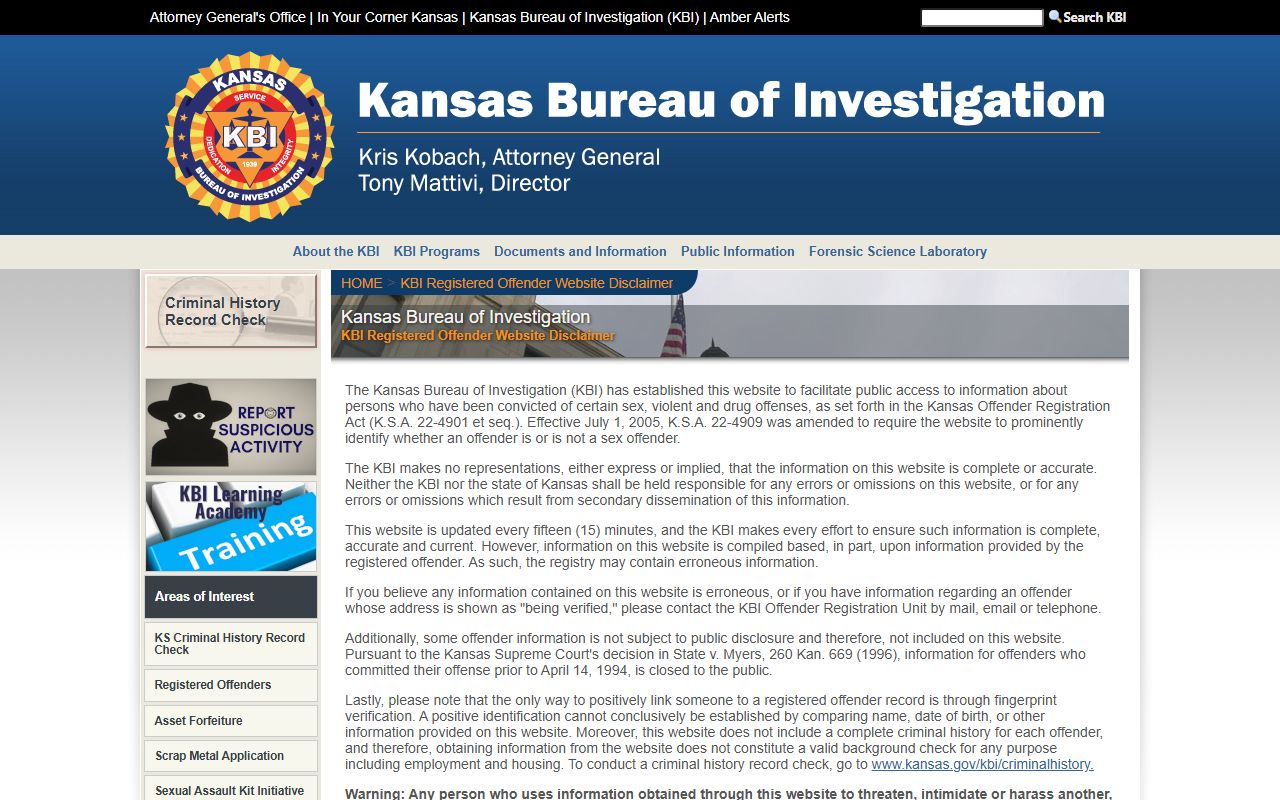
Use offender registry information only for its stated public-registry purpose, then verify case history through the court or KBI history channel as needed.
Background Check Considerations
Casual public searches and official background checks answer different questions. CaseSearch can help identify public Edwards County criminal case activity. KBI criminal history can report statewide central repository information within Kansas release rules. Private background screening for credit, employment, tenant, insurance, or other regulated use must follow the Fair Credit Reporting Act and cannot rely on a general public website as a consumer report.
Important: Do not use public court lookup results as an FCRA consumer report for hiring, tenant screening, credit, or insurance decisions.
The manifest assigns the Kansas State Board of Indigents' Defense Services homepage and its contact directory to this page.

Defense appointment information is relevant to criminal court records because counsel filings, motions, and notices often appear in the docket.
The related assigned source is the BIDS contact directory.

For an Edwards County defendant, appointed counsel questions should still be raised with the court handling the criminal case.
Restricted Edwards County Criminal Records
Restricted criminal records can include juvenile matters, sealed cases, expunged records, confidential identifiers, certain warrant materials, victim information, protected addresses, medical or treatment details, and law enforcement records that Kansas law does not require to be disclosed. Search warrant affidavits and sworn testimony are not public until execution under K.S.A. 22-2502, and even after execution the court can allow redaction or sealing.
When a criminal court record cannot be found online, the reason may be technical, local, or legal. The case may be older, filed under a different name, municipal rather than district court, sealed, expunged, juvenile, or not yet updated in public search. The practical fallback chain is CaseSearch, the Edwards County courthouse terminal, the Clerk of the District Court, Kinsley Municipal Court for city cases, and KBI for statewide criminal history when one-case court records are not enough.